 ™
™
CAD fluency
Using digital modelling tools with greater control and intention.
Practical CAD, design and 3D-printing activity that helps secondary learners strengthen technical confidence and understand how products are developed.
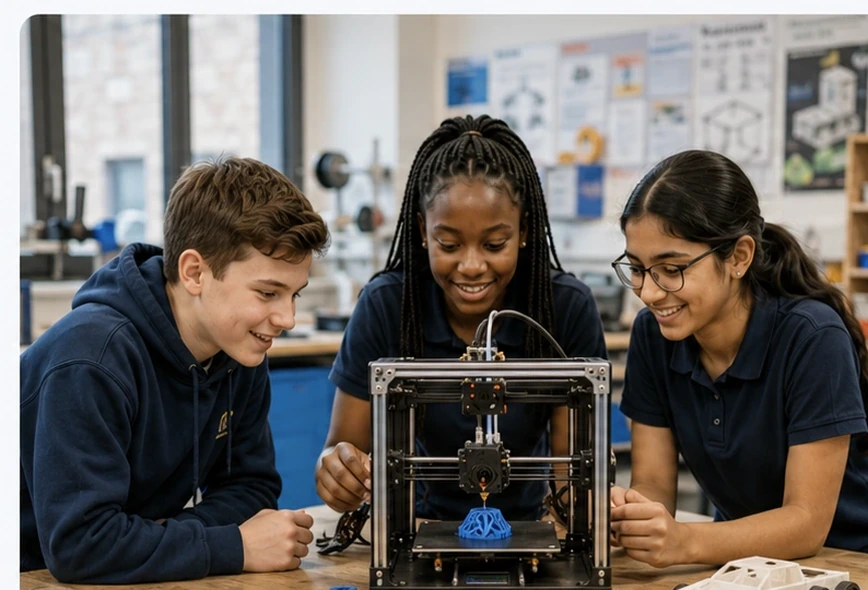
Secondary learners are ready to move beyond following instructions. They can interpret constraints, justify decisions and compare the performance of different solutions.
CAD and additive manufacturing provide a practical context for that thinking, allowing learners to see how accuracy, material, scale and iteration influence a final result.
The programme creates a context in which technical ability and transferable skills develop together.
Using digital modelling tools with greater control and intention.
Explaining why a solution suits its user, purpose and constraints.
Using evidence from testing to identify meaningful improvements.
Presenting a process and outcome clearly to others.
Technical sessions work best when access, expectations and the learner starting point are clear before delivery.
Share the year group, class size and any previous CAD, design or manufacturing experience.
Confirm devices, accounts, browser or software access and any school-network restrictions that may affect delivery.
Clarify whether learners need a prototype, CAD file, evaluation, presentation or other evidence from the activity.
Identify the member of staff supporting the session and any classroom, timetable or learner-management considerations.
Delivery can support a focused topic, wider STEM enrichment or a longer practical design sequence.
A practical brief aligned with the technical depth and outcomes required by the learner group.
An engaging route into engineering, product design and digital manufacturing concepts.
Activity that helps learners understand further-study and career pathways connected to design technology.
The final scope is always confirmed against the learner group, setting and intended outcome.
Yes. The scope and independence expected from learners are discussed during planning and adapted to the group.
The programme can be planned around relevant design, technology and problem-solving objectives. Specific curriculum links should be agreed before delivery.
Depending on the format, the process can include design development, screenshots, evaluation and presentation material that demonstrates the learner’s thinking.
Share the year group, intended depth and available timetable so we can recommend an appropriate format.