 ™
™
Technical modelling
Creating controlled digital geometry suited to a defined purpose.
Applied CAD, prototyping and additive-manufacturing experiences for sixth forms, colleges and technical learners preparing for their next stage.
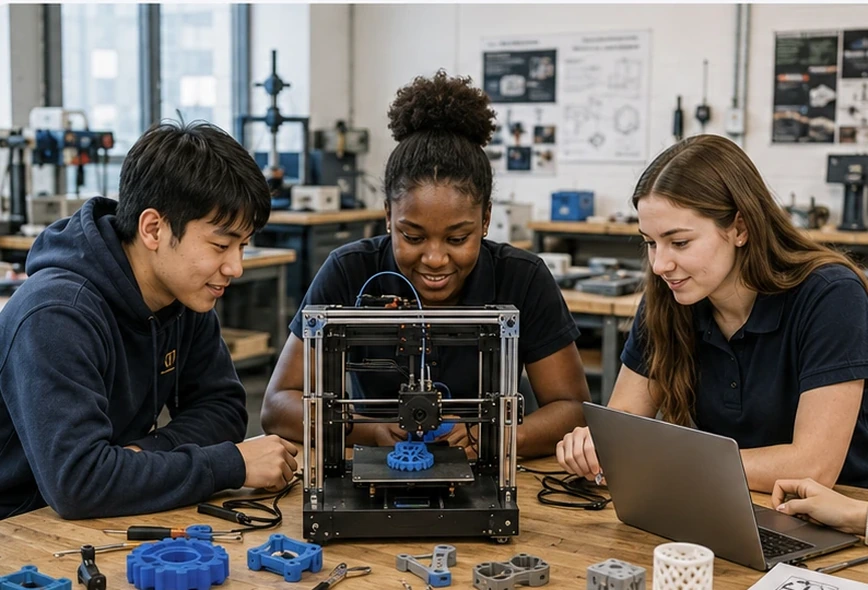
Post-16 learners benefit from briefs that require accuracy, planning and independent decision-making. The technology becomes part of a wider process: defining a need, modelling a response and evaluating whether it works.
This creates a practical bridge between subject knowledge and the expectations of further study, technical training and industry-facing project work.
The aim is not simply to complete a print, but to demonstrate a considered technical process.
Creating controlled digital geometry suited to a defined purpose.
Assessing form, function, manufacture and possible improvement.
Recording decisions, development and evidence in a professional manner.
Explaining a technical solution to tutors, peers or project stakeholders.
Post-16 groups vary widely in experience, so the strongest starting point is a clear picture of the course, capability and required evidence.
Tell us the qualification, subject area or enrichment purpose the activity needs to support.
Outline the group’s existing CAD, design, engineering or manufacturing experience.
Confirm whether learners need portfolio material, assessed evidence, a prototype or a presentation outcome.
Share the software, devices, workshop access and manufacturing constraints that shape what is realistic.
We discuss subject context, learner experience and the required output before defining the programme scope.
Applied design activity connected to practical, technical or manufacturing study.
A focused experience that strengthens problem-solving and adds technical breadth.
Project work that supports discussion of portfolios, university study, apprenticeships and careers.
The final scope is always confirmed against the learner group, setting and intended outcome.
Potential alignment is discussed during planning. The brief, technical depth and required evidence can be shaped around the intended learner context.
Yes, where the group’s prior experience and the available delivery time support it. We agree a realistic level before the programme begins.
Yes. Applied design and prototyping provide a useful context for discussing engineering, product design, digital manufacturing and related pathways.
Tell us the course, learner profile and intended project outcome so we can discuss a credible delivery route.