 ™
™
Imagination
Generating ideas and considering different ways to solve a challenge.
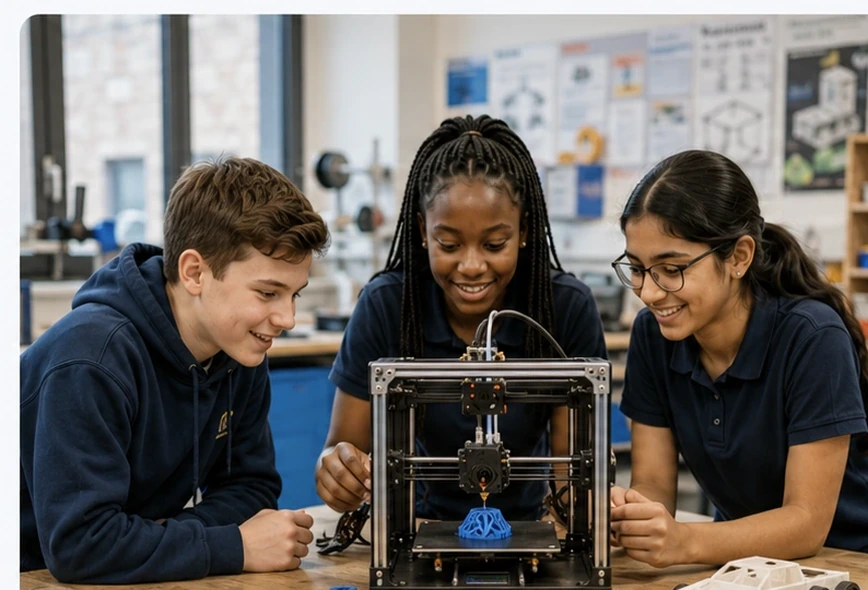
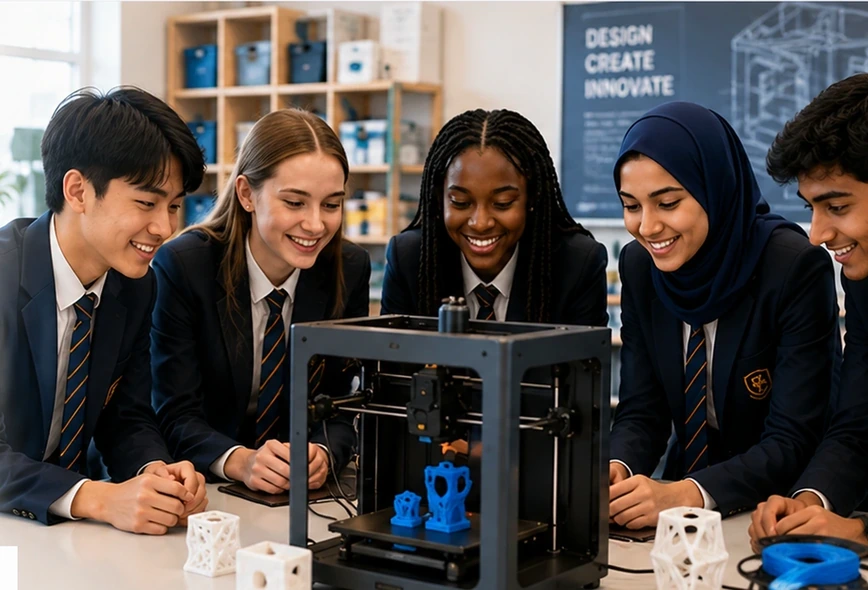
Age-appropriate CAD and 3D-printing experiences that make technical learning tangible, collaborative and exciting for younger learners.

Younger learners engage best when abstract ideas become visible. A digital model can be rotated, questioned and changed; a printed object can be handled, tested and evaluated.
The programme uses that connection to introduce design thinking in a way that feels purposeful rather than intimidating.
Projects are practical, but the learning reaches across design, computing, communication and personal development.
Generating ideas and considering different ways to solve a challenge.
Exploring shape, size, proportion and how parts fit together.
Listening, sharing responsibility and making group decisions.
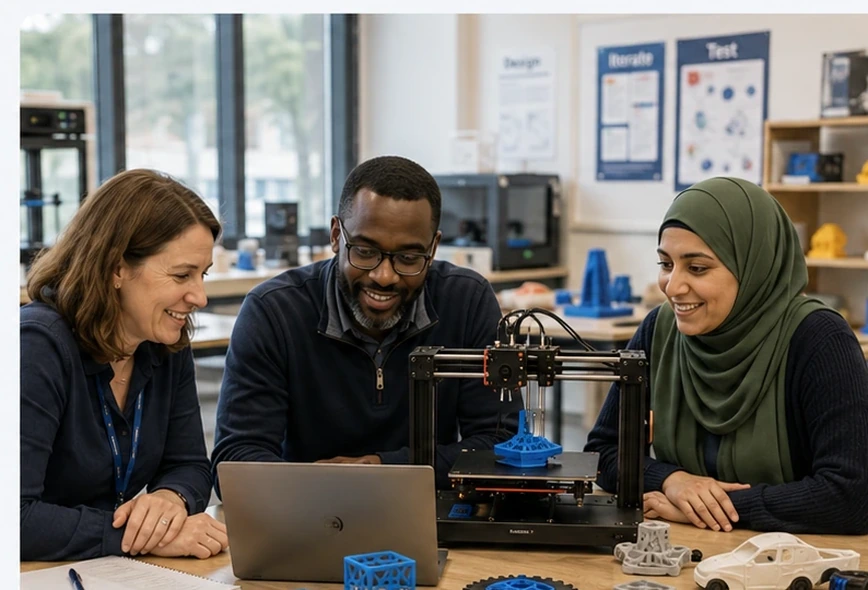
Treating testing and revision as a normal part of making something better.
A few practical arrangements help younger learners start quickly, stay focused and get the most from the session.
Confirm the year group, learner numbers and the staff or teaching-assistant support available.
Make sure required computers are charged, accessible and able to use the agreed software or browser tools.
Provide suitable working space, power and any display or projection equipment agreed for the activity.
Share relevant accessibility, SEND or participation information that will help us support the group appropriately.
We shape the scope around age, group size, available time and the educational purpose of the activity.
Practical design activity connected to a wider classroom theme or learning objective.
A progressive club format where learners can build confidence over multiple sessions.
An engaging shared experience built around design, making and collaborative problem-solving.
The final scope is always confirmed against the learner group, setting and intended outcome.
Yes. The programme introduces the tools and design process gradually, with guidance appropriate to the age and experience of the group.
No specialist prior knowledge is expected from learners. The delivery scope is agreed with the school so that tasks are realistic for the group.
Where suitable, the design brief can be discussed in relation to the school’s intended theme or learning outcome.
Tell us the year group, number of learners and the outcome you want to support.