 ™
™
Advanced modelling
Developing geometry with attention to tolerance, assembly and manufacture.
Advanced design and additive-manufacturing activity for higher-education learners, departments and selected university partnerships.
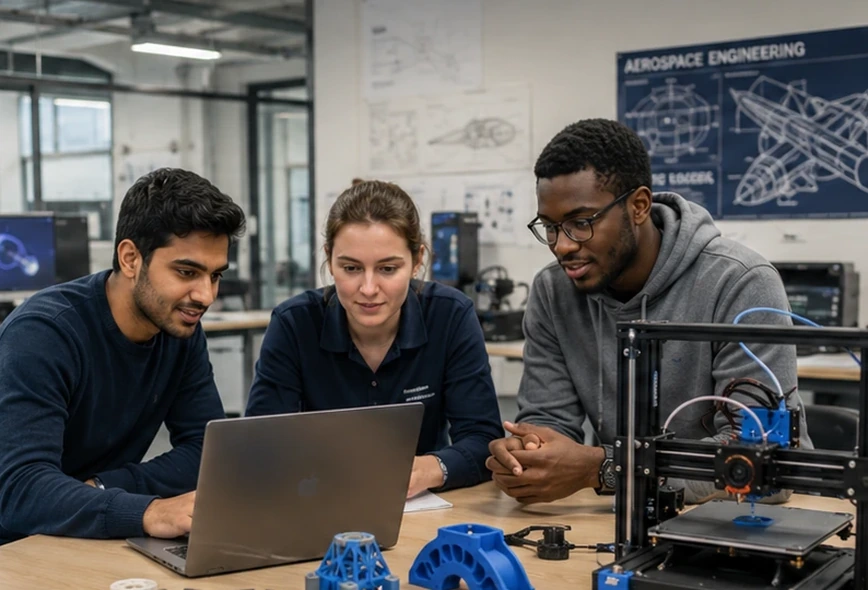
At higher-education level, additive manufacturing is most valuable when it enables investigation, communication or validation within a wider academic or technical project.
We therefore begin with the department’s context, learner level and intended outcomes before discussing the appropriate tools, depth and delivery model.
The programme can emphasise different capabilities according to the discipline and project purpose.
Developing geometry with attention to tolerance, assembly and manufacture.
Using prototypes to investigate assumptions and support decisions.
Evaluating process, limitations and evidence with appropriate depth.
Making technical work understandable to collaborators and stakeholders.
University activity is strongest when the academic purpose, cohort capability and practical constraints are explicit from the outset.
Identify the module, project, research question or skills objective the activity needs to support.
Share learner numbers and the expected level of CAD, prototyping or technical independence.
Clarify what the physical outcome is intended to test, demonstrate, compare or communicate.
Confirm software, equipment, materials, access requirements and the outputs expected after delivery.
The examples below are starting points; final scope is agreed with the relevant academic or technical team.
Focused practical input supporting a defined module, brief or technical method.
Support for learners developing physical evidence within a wider design or research project.
A scoped collaboration around learner development, facilities or specialist activity.
The final scope is always confirmed against the learner group, setting and intended outcome.
No. University activity is discussed in relation to the discipline, learner level and intended output before a scope is proposed.
Potentially, yes. We need to understand the module outcomes, timetable and assessment context before confirming suitability.
Educator or technical-team development can be discussed as part of the wider requirement.
Share the discipline, learner level and intended output so we can assess whether a tailored programme is appropriate.